About St John The Baptist Byzantine Catholic Church!
What we believe
Click the titles to for a summary.
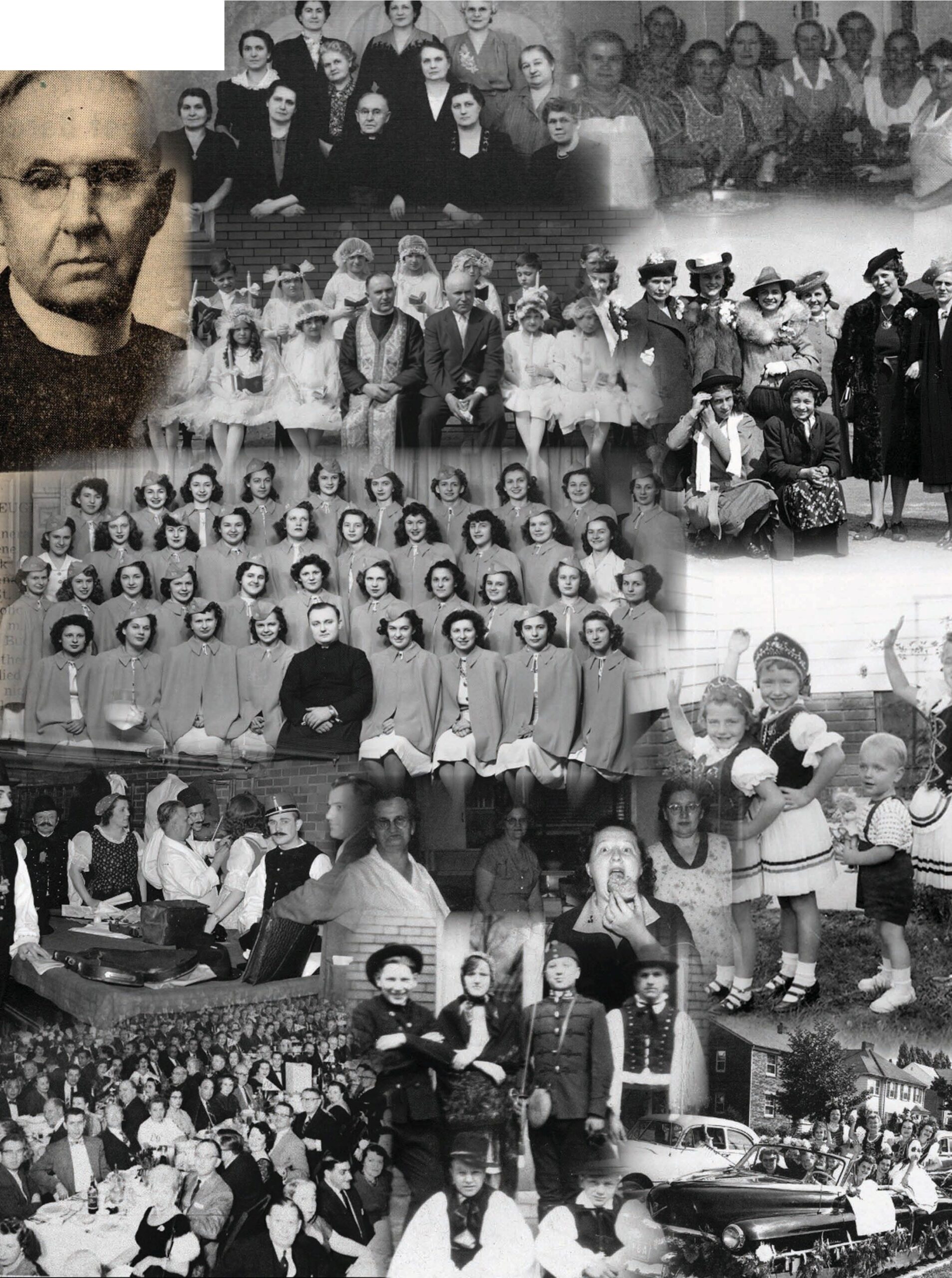
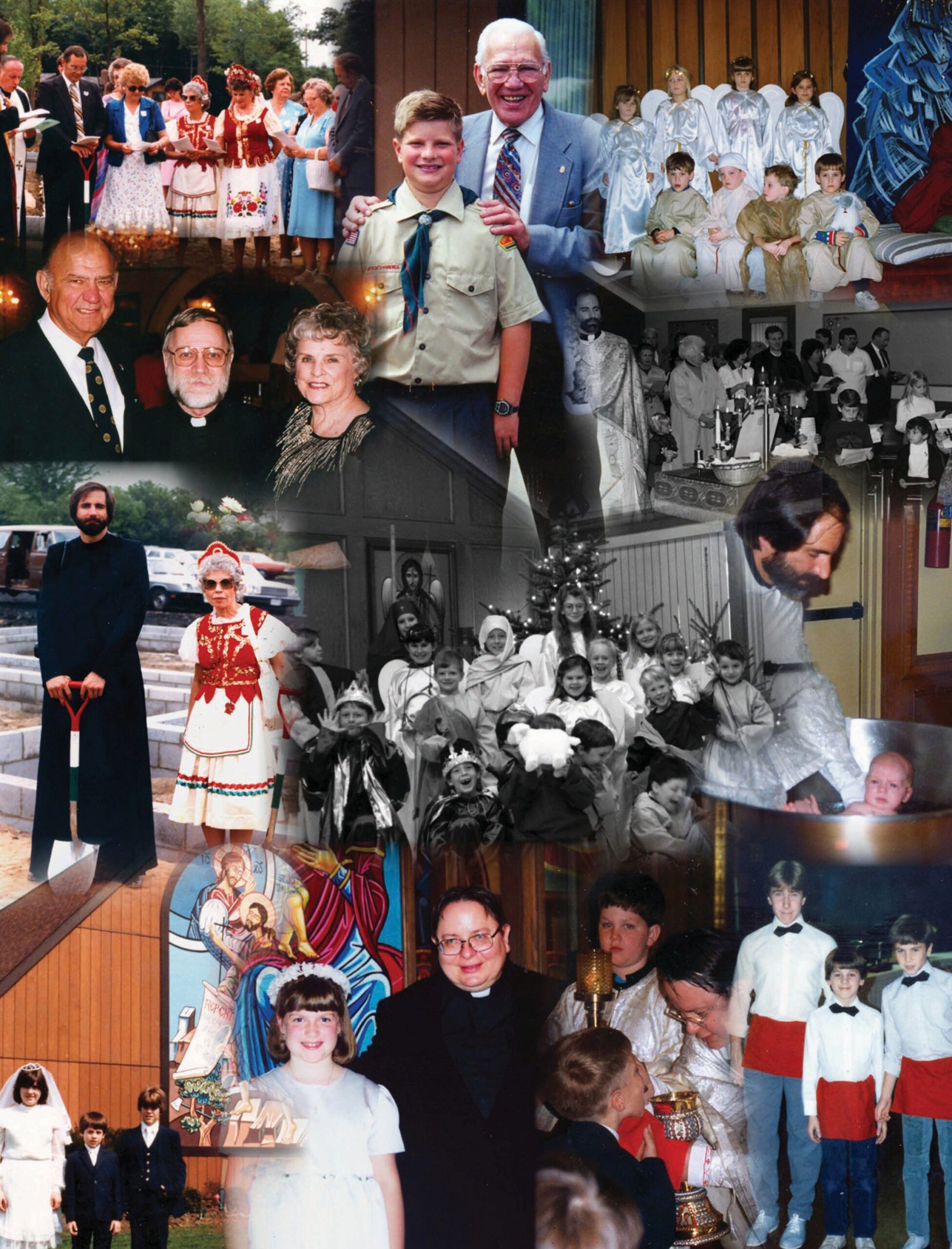
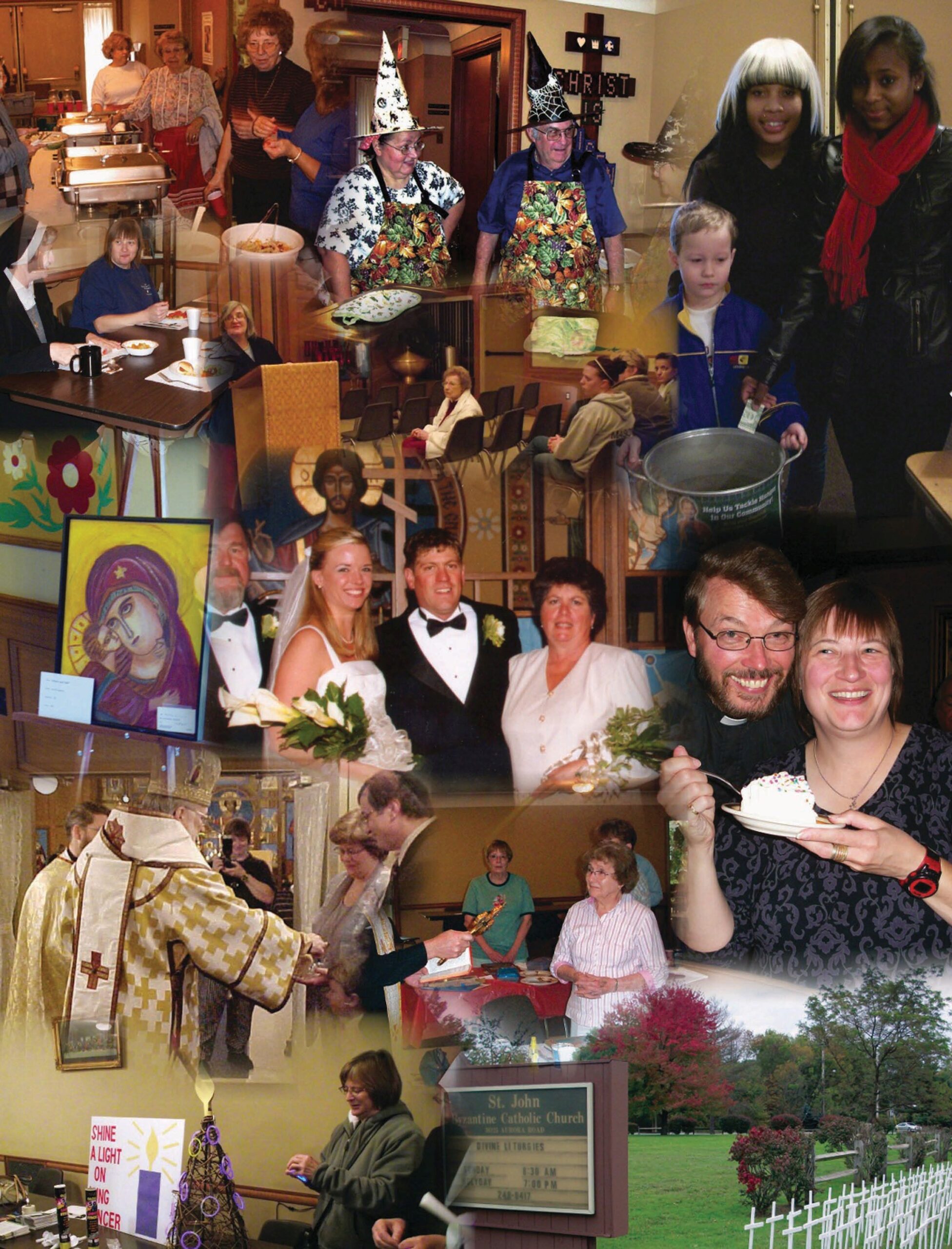
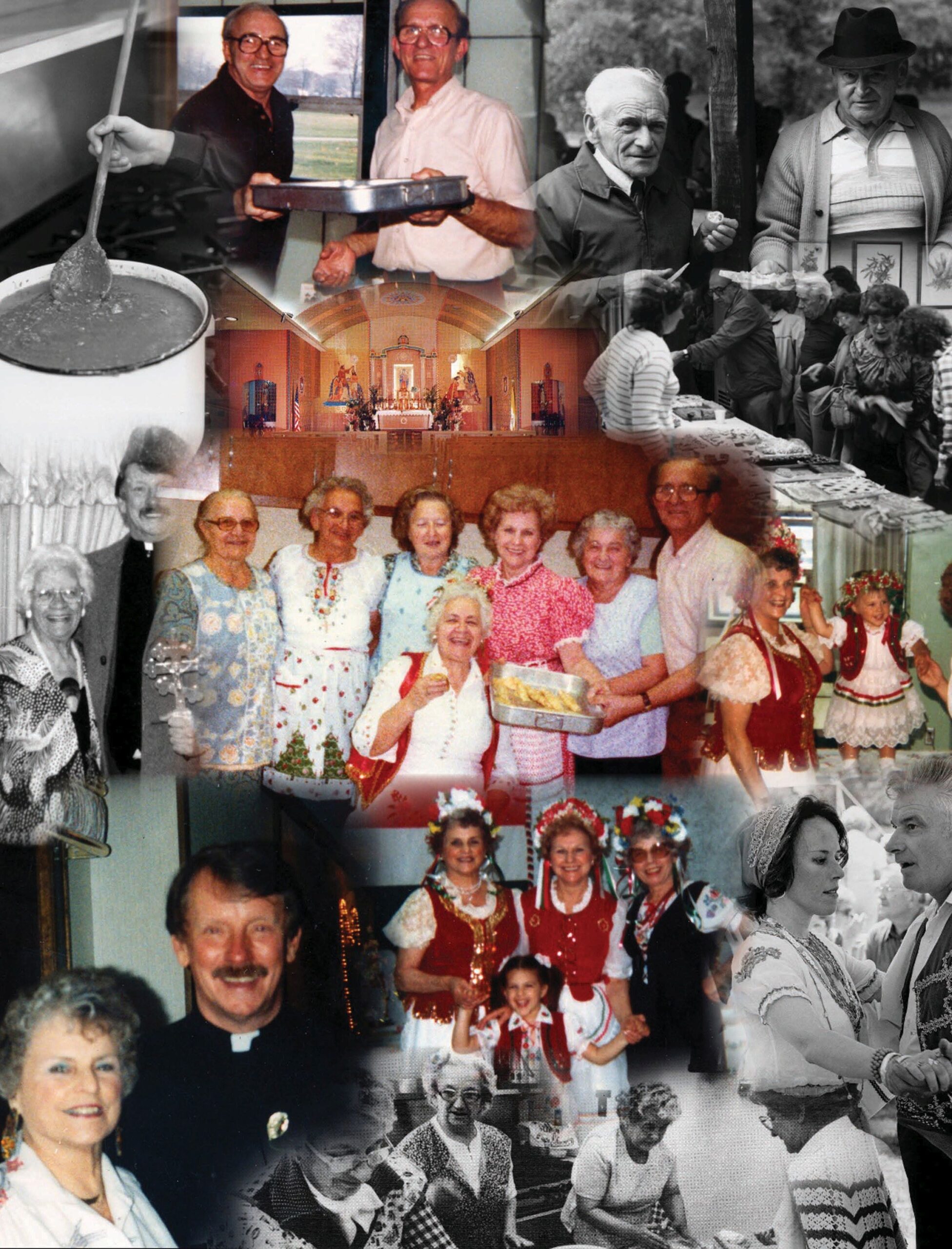
Photos Throughout the Years
The Enduring Faith of a Community: The History of St. John the Baptist Byzantine Catholic Church
A New Beginning in America
At the close of the 19th century, a wave of Hungarian immigrants sought a new life in America. Many from northeastern Hungary found a home on the east side of Cleveland, near East 79th Street and Holton Avenue. United by a common heritage and a desire to support one another, they aimed to build a better future while still aiding their loved ones back in Hungary.
Among these resilient immigrants was a strong community of Greek Catholics. Fueled by their faith and a deep desire to preserve their Hungarian identity, they established St. Michael’s Lodge for men and St. Ann’s Lodge for women. These two organizations eventually merged, forming St. John’s Lodge. The Knights chapter of this lodge, with their magnificent hussar uniforms, often captivated the people of Cleveland with their grand horseback parades.
The Yearning for a Spiritual Home
Despite the success of the lodge, the community felt a profound longing to worship in their own church, in their own language, and according to the cherished traditions of the Byzantine Liturgy they had known in their Hungarian villages. This deep love for their Byzantine traditions and Hungarian culture spurred them to action.
In August of 1892, the Greek Catholics of Cleveland came together with a shared purpose: to establish a parish and build their own church. They wrote to Bishop Julius Firczak of Ungvar, requesting a priest to guide them. In response, Bishop Firczak sent Father John Csurgovich.
The Birth of a Parish
Working hand in hand, Father Csurgovich and his dedicated congregation brought St. John the Baptist First Hungarian Greek Catholic Church to life. On January 6, 1893, the Feast of the Theophany, Father Csurgovich celebrated the first Divine Liturgy in Lohman Hall, the parish’s temporary home.
Our Esteemed Founders
We honor the memory of our parish’s founders, whose tireless efforts laid the foundation for generations to come. Their courageous work continues to inspire us. We lovingly remember:
- John Aczel
- Joseph Andrassy
- Steve Budai
- Steve Czingili
- Peter Demchak
- John Kmetz
- George Muren
- Joseph Nagy
- Andrew Pavlish
- John Petrecki
- George Ratica
- John Resetar
- Michael Ruscin
- Steve Timko, Sr.
- Steve Timko, Jr.
- George Trubicza
- Andre Tusz
- George Vajda
- Michael Veres
Early Growth and New Shepherds
Initially, Father Csurgovich’s congregation consisted of just 40 families. This small yet ambitious group worked diligently, and as word spread, more Hungarian families joined the parish. In 1893, their hard work culminated in the construction of the first church and parish home on Rawlings Avenue in Cleveland.
Father Csurgovich’s impactful leadership lasted for three years before he was called to organize another parish in Lorain, Ohio. He was succeeded by Father Doctor Simon Szabo, who served for two years before returning to Hungary to become a professor of theology. His outstanding service later earned him the title of monsignor.
The parish on Rawlings Avenue was then guided by a series of dedicated priests:
- Father Ireneus Matyaczko
- Father Julius Orosz
- Father Elek Vajda
- Father John Lukach (who became pastor in 1903)
A New Home on Buckeye Road
In 1908, under the pastorate of Father Lukach, the parish acquired property on Buckeye Road and constructed its second church. This location would serve the Hungarian Greek Catholic community for the next 74 years.
From that time until 1921, the parish was served by a number of devoted priests:
- Father Oreszt Csornyak
- Father Michael Lukach
- Father Victor Kizak
- Father Miklos Chorba
- Father Michael Balogh
- Father Balint Balogh
- Father Basil Ivancso
An Era of Revival and Community Building
On March 28, 1921, Father Edmond Tabakovich was appointed pastor. During these challenging times, his noble guidance and immense patience led the parish through many hardships, sparking a strong revival over his 30 years of leadership.
A significant milestone was the construction of St. John Hall in 1939, which was blessed by Bishop Basil Takach on January 14, 1941. As the largest hall on Buckeye Road, complete with clubrooms and bowling alleys, it quickly became the heart of the community for cultural, social, and sporting events.
Father Tabakovich was deeply committed to the spiritual upbringing of the younger generation. He organized a six-week summer program to teach Hungarian and offered catechism classes for public school children. His presence kept the vision of the founding fathers alive until his passing on January 5, 1952. His blessed and winning personality remains in the memory of the parish forever. He was assisted by Father Albert Gaydos and Father John Gernat.
A Time of New Growth and a New Church
Following Father Tabakovich’s death, Bishop Daniel Ivancho appointed Father Doctor Julius Marina as pastor, who was assisted by Father Basil Shereghy.
In September 1952, Father Doctor Alexander Bobak became the new pastor, bringing with him a renewed sense of hope and vitality. One of his first and most significant undertakings was the establishment of a parochial school. Ground was broken for the school in October 1952, just one month after his arrival.
The school opened the following year, serving children from kindergarten through seventh grade, and marking a historic moment as the first Greek Catholic school in the United States. The Sisters of St. Basil the Great were entrusted with running the school, and the strong involvement of parents led to the creation of the first Greek Catholic Parent, Teacher Unit.
Inspired by this progress, the parishioners suggested rebuilding the church to match the new school. With great joy, Father Bobak embraced the idea. On St. Thomas Sunday in 1953, the final Divine Liturgy was celebrated in the old church. That afternoon, in a touching procession, Father Bobak carried the Blessed Sacrament from the old building, symbolizing a departure from a cherished space but a continuation of faith.
The cornerstone for the new church was blessed in July 1953. The parish also purchased and remodeled a home for the venerable sisters, creating a convent with a beautiful chapel. The new church was completed and dedicated on October 31, 1954, with Bishop Nicholas Elko officiating in the presence of Bishop Hoban of the Cleveland Diocese and other local dignitaries.
Continued Expansion and a National Shrine
As the parish grew, it acquired the house between the convent and the rectory. The old rectory was demolished, and the newly acquired house was remodeled, with the additional space used for a schoolyard and much-needed parking.
During his tenure from 1952 to 1975, Father Bobak was assisted by four priests:
- Father John Kost
- Father Simon Galvach
- Father Laszlo Orosz
- Father John Bobak
The parish school continued to serve the community until 1972 when financial constraints led to its closure.
A major accomplishment during this time was the founding of the Shrine of Our Lady of Mariapoch in Burton, Ohio. The parishioners once again sacrificed and labored to create a place of pilgrimage in honor of the Blessed Virgin. This shrine continues to attract visitors from across the state and beyond. In 1975, Father Bobak left St. John Parish to become the resident priest at the shrine.
A Period of Transition
Following Father Bobak’s departure, the parish was led by a series of priests who guided the community through a period of change.
- Father Emery Nemeth served for less than a year.
- He was replaced by Father Richard Zuback from Canada, who, with the help of dedicated parishioners, revitalized some of the parish’s traditions.
- In 1979, Father Stanley Bartkus was assigned as administrator while also serving as pastor of St. Joseph Byzantine Church.
By 1980, the parish, once one of the largest in the area, had dwindled to a small group of dedicated members. The financial burden of maintaining the large facility on Buckeye Road became too great. In a move that echoed the courage of their ancestors, this small but optimistic group chose to sell the property that had been their home for 74 years, seeking a new beginning. The last Divine Liturgy at the Buckeye Road church was celebrated on January 10, 1982.
The Miracle Unfolds: A New Home in Solon
For many, the closing of the church on Buckeye Road seemed like the final chapter. However, about 40 families, a number similar to the original founders, were determined to see St. John Church continue. Driven by a desire to preserve their heritage, they embarked on a new journey.
For two years, the congregation held Divine Liturgy in a school gymnasium in Brecksville while searching for a new home. They envisioned a new church in the eastern suburbs of Cleveland to perpetuate the traditions of the Byzantine Catholics. Despite the bishop’s disagreement, they persevered, purchased land in Solon, and requested a priest.
On March 5, 1983, Father Thomas Loya celebrated his first Liturgy for the parish at the Solon Historical Society. Ground was broken in June 1983, and the fourth church of St. John the Baptist was built. The first Liturgy in the new building was celebrated at the Compline Service on Christmas Eve, December 24, 1983.
Through dedicated fundraising, the mortgage was paid off in just four years. The parish continued to grow, adding a distinctive Byzantine dome, a gathering space known as the St. Nicholas Room, and an Upper Room for meetings and social events.
Over the next four decades, the parish was served by:
- Father Thomas Loya
- Father Michael Huszti
- Father Joseph Repko
- Father Andrey Kovalenko
- Father Bruce Riebe
- Father Marek Visnovsky
- Father Lukas Mitro
The current administrator is Father Jan Maturkanic.
A Legacy of Vocations and Dedicated Cantors
Throughout its 133-year history, our parish has been blessed with two young men who answered the call to the priesthood:
- Father Victor Herberth, ordained on April 23, 1960.
- Father John Kovach, ordained on March 25, 1965.
Both celebrated their first Liturgy at St. John Church.
Our parish has also been enriched by the talents of many dedicated cantors who have led our liturgical music:
- John Petreczky (the first cantor)
- George Rinyu
- Frank Sprok
- Michael Bucsko (served for 30 years and taught Hungarian language and culture)
- Professor Nicholas Kalvin (organized the largest choir in the parish’s history)
- Dr. Steven Domjan
- Michael Resko
- Frank Artim
- Joseph Majoros
- John Boros
- Olga Fekeshazy
- Linda Parker (served faithfully for 38 years)
- Jonathan Loya (our current cantor)
Looking to the Future
As the oldest Hungarian Byzantine Catholic parish in the United States, St. John the Baptist Church has witnessed remarkable changes over the past 133 years. We prayerfully acknowledge God’s loving Divine Providence and the intercession of our patron, St. John the Baptist, and the Eastern European beatified bishops whose relics we are honored to venerate in our church.
We gratefully continue the work started in 1892 by a small group of faithful Byzantine Catholics of Hungarian origin. While we proudly acknowledge this heritage, we are no longer an ethnic parish; we warmly welcome all to our community of faith. The miracle of St. John’s is ever-unfolding, revealing more of God’s grace with each passing year
Mission Statement
St. John the Baptist Byzantine Catholic Parish is a community of Christians which comes together regularly to worship the Holy Trinity according to the Byzantine Tradition within the Catholic Church.
As our patron, St. John the Baptist, heroically prepared the way for the Lord, so our Christian witness points the way to the kingdom of our heavenly Father.
We follow the Gospel of our lord and savior Jesus Christ as we strive for union with God. Through baptism and chrismation, we have been sealed by the Holy Spirit, which strengthens us to evangelize ourselves and others.
Having received the Divine gift of our faith, our grateful response is that we aim to share this gift with all people.
Our rich ethnic backgrounds remind us to warmly welcome all to our community of faith.We partake of the holy Eucharist to spiritually nourish us in order to fulfill the mission to serve others as did Christ.
We engage ourselves in spiritual growth, increased teaching, community service and responsible church support to become beacons that beam outward from our church to the world.
St. John’s is under the leadership of the Eparchy of Parma.